
Gums & jawbone
We check gum inflammation and the amount of bone
at the placement site.
Seoul Korea Dental Clinic
A dental implant is a treatment in which an artificial root is placed where a tooth has been lost, and a prosthesis is connected on top.
Even for the same site, the treatment method and duration differ depending on the gums and jawbone, the bite with opposing teeth, and general health.
Seoul Korea Dental Clinic explains the examination results first, and decides with you whether to place an implant and in what order to proceed.
With an oral examination, X-rays, and CT imaging, we check the height and width of the jawbone
and its distance from nerves and the maxillary sinus.
We record the teeth and gums as digital data with an intraoral scanner
and review the bite and the space for the prosthesis together.
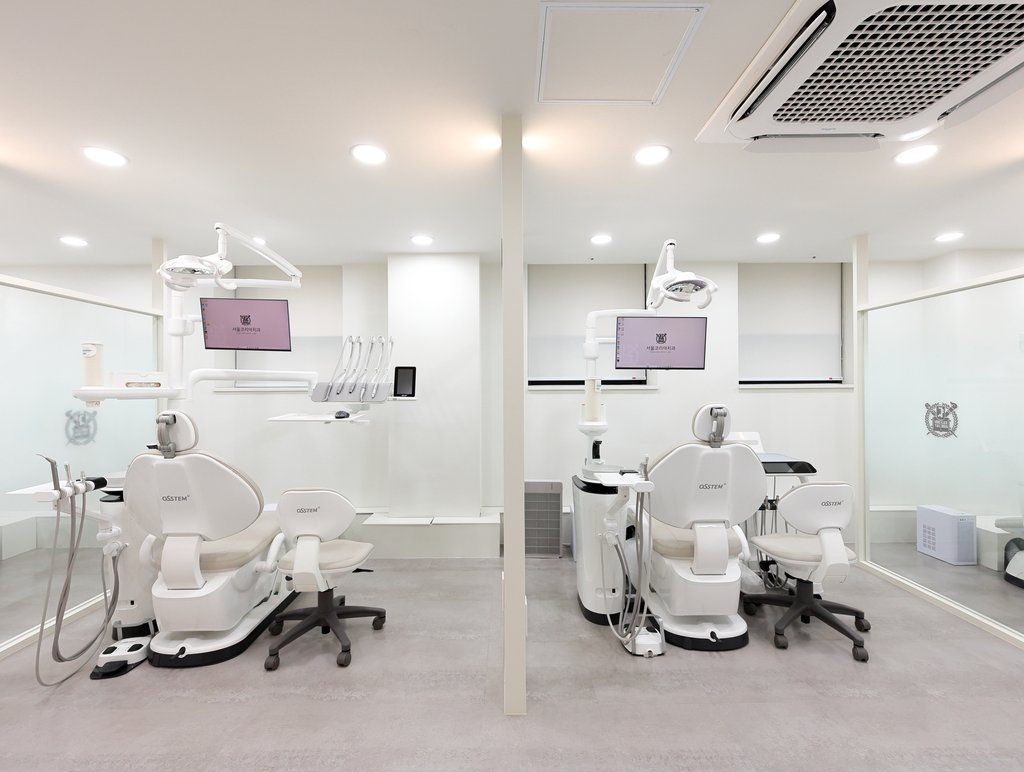
If there is gum inflammation or periodontal disease, we treat it first and then decide when to place the implant.
We check whether the height and width of the bone are sufficient and whether a bone graft is needed.
We check the distance to the lower jaw nerve canal and the upper jaw maxillary sinus on CT images.
We plan the shape of the prosthesis based on the opposing teeth and the direction of chewing forces.
We check systemic conditions such as diabetes and high blood pressure, and current medications.
If you feel strong anxiety about dental treatment, we discuss treatment approaches with you.
Conscious SedationWe explain the sites and number of implants, and whether extraction or bone grafting is needed.
We give you an approximate schedule, including the healing period, and the number of visits.
We also explain how implants differ from other options such as bridges and dentures.
We check and explain non-covered items and whether National Health Insurance applies.
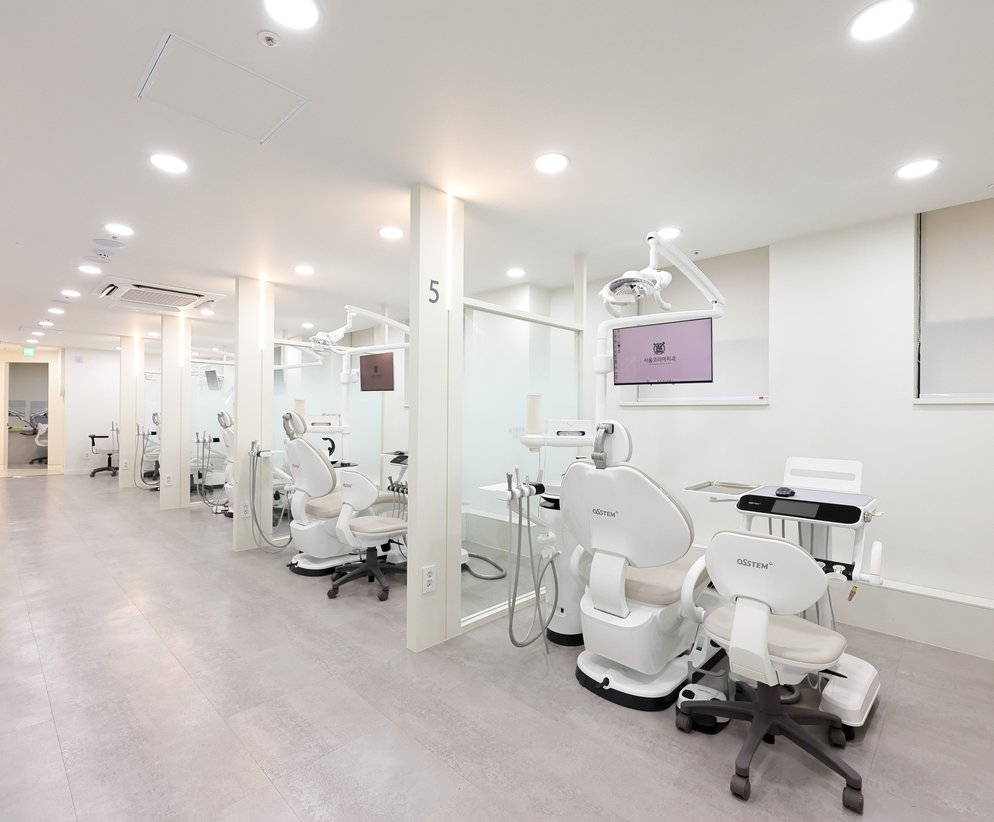
Intraoral scanner
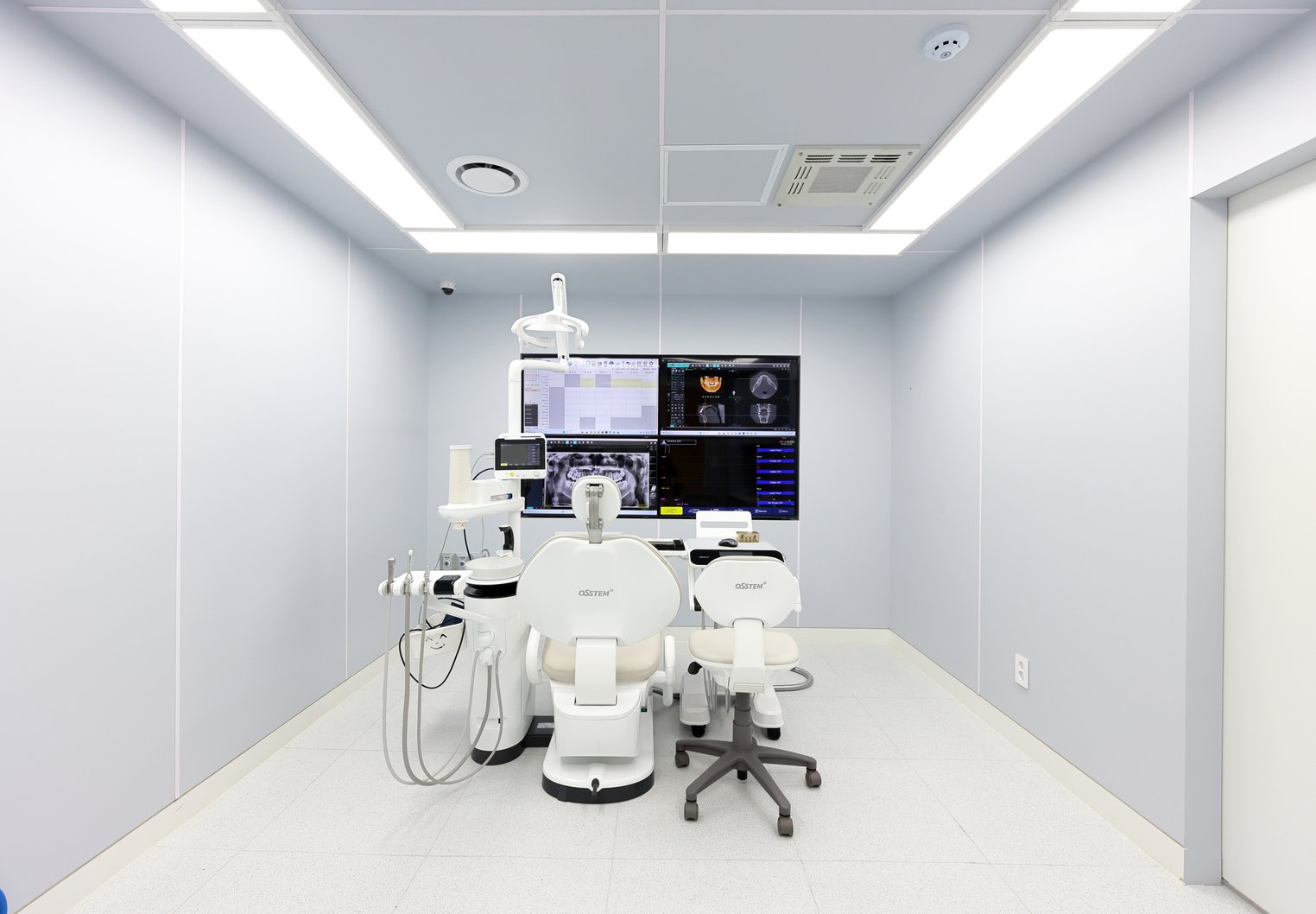
CT imaging
Vital sign monitoring
If you have chronic conditions such as diabetes or high blood pressure, or take medications, we check your health before surgery
and, if needed, also review an opinion from another medical institution.
If you have put off treatment because of strong anxiety about dental treatment,
you can also consult us about conscious sedation or general anesthesia.
Please tell us about any conditions you are being treated for, such as diabetes, high blood pressure, or heart and blood vessel disease.
Medications such as blood thinners and osteoporosis treatments need to be checked in advance. Please do not stop them on your own.
Please tell us about past surgery or sedation/anesthesia experiences and how you reacted.
Smoking can affect wound healing, so we check it during consultation.
Standard implant surgery is performed under local anesthesia.
A method that uses medication to lower anxiety and tension; you breathe on your own and can respond to simple instructions. Whether it can be used is decided after a pre-treatment assessment.
About conscious sedationConsidered after a pre-treatment assessment when treatment is difficult with usual methods.
About general anesthesiaIf a long time has passed since a tooth was lost, or gum disease has progressed, the jawbone may have decreased.
A bone graft reinforces the deficient area with bone graft material to create conditions for implant placement.
For upper molars, we consider a sinus lift (crestal or lateral approach) depending on the distance to the maxillary sinus.
Implant treatment usually proceeds in this order: examination and consultation, placement, healing period, prosthesis connection, and regular check-ups.
Depending on the jawbone condition and the scope of treatment, steps may be added or the duration may change.
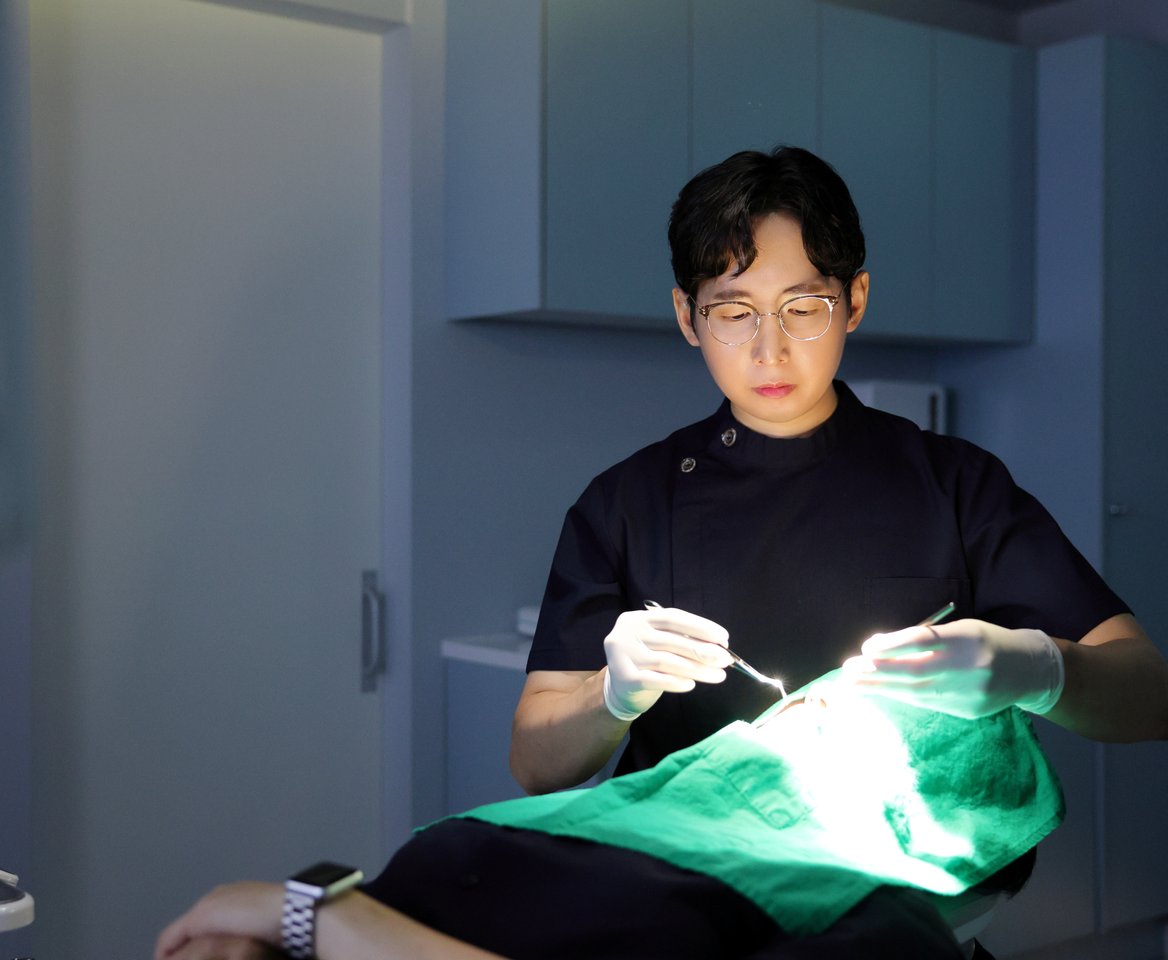
We explain the CT and oral examination results and decide on the treatment plan.
After local anesthesia, the artificial root is placed in the planned position.
We wait until the artificial root has firmly bonded with the jawbone. The duration depends on the bone condition and site.
The prosthesis is made using an intraoral scan or similar methods, then connected and the bite adjusted.
We continue care while checking the gums and bite.
Based on inflammation and the jawbone condition, we decide whether to place the implant immediately or after healing.
A bone graft may be done at the same time or beforehand.
The implant is placed after gum treatment has reduced the inflammation.
We set the treatment order together with other treatments such as cavity treatment, root canal treatment, and orthodontics.
Integrated Dental CareIf an existing implant has become inflamed or loose, we first check the cause.
After examining for peri-implantitis, jawbone loss, bite problems, and more,
we plan whether to maintain the existing implant with care, or remove it and place a new one.
We check for inflammation in the gums and bone around the implant.
We check how much the bone supporting the implant has decreased.
We check the bite to see whether chewing forces are concentrated on one side.
We check for loose screws, broken prostheses, food getting stuck, and similar issues.
We check X-ray and CT images and the condition of the gums.
We explain the cause of the problem and treatment options.
We first treat gum inflammation and adjust the prosthesis.
If needed, the implant is removed, the bone is allowed to recover, and a new implant is placed.
For people aged 65 or older, Korea's National Health Insurance may cover implant treatment according to its criteria.
The number of covered implants, the co-payment rate, and non-covered items vary depending on the insurance criteria and treatment details,
so we explain them during the consultation after your examination.
65 or older
Partially edentulous (some teeth missing)
Within the number set by the National Health Insurance criteria
Registration for National Health Insurance coverage before treatment begins
We check whether coverage applies based on your oral condition and treatment plan.
We explain the co-payment amount under the National Health Insurance criteria.
If there are items not covered by National Health Insurance, we explain them in advance.
Implants do not get cavities, but inflammation in the surrounding gums can lead to peri-implantitis.
Please keep your gums and bite in check with regular check-ups, scaling, proper brushing, and interdental care.
We check for swelling and bleeding in the gums around the implant.
We check that the prosthesis meets the opposing teeth evenly and adjust it if needed.
Removing tartar helps reduce gum inflammation.
Please clean carefully around the implant with an interdental brush or floss.
Smoking can affect gum health.
If you notice looseness, gum swelling or bleeding, or discomfort when chewing, please visit us.
If you grind or clench your teeth, please let us know.

We check gum inflammation and the amount of bone
at the placement site.

We plan the prosthesis considering the opposing teeth
and chewing forces.

We check systemic conditions, medications,
and past treatment and anesthesia experiences.

We guide patients and caregivers on care
they can practice at home.
Bite on the gauze for the time you are told
to stop the bleeding.

Take your prescribed medication
at the scheduled times.

Spitting, using a straw, or blowing your nose hard
can increase bleeding, so please avoid them.

Alcohol and smoking can slow healing,
so please avoid them for the period you are told.

If there is swelling, apply a cold compress
as directed by our medical team.

If pain or bleeding continues or gets worse,
please contact the clinic.

For a few days after surgery, avoid saunas,
hot packs, and strenuous exercise.

Eat soft food on the side opposite the surgical site
and avoid hot or hard food.

Brush while avoiding the surgical site,
and use mouthwash as directed.

Conscious sedation may be considered if you feel strong anxiety about dental sounds or need complex implant surgery. Whether it can be used is decided after a pre-treatment assessment of systemic conditions, medications, respiratory condition, and more; if it is judged not to be appropriate, we will explain other treatment options. Conscious Sedation
Having a systemic condition does not mean implants are always difficult. We check how well the condition is controlled and your medications, and, if needed, refer to an opinion from another medical institution to decide the timing and method of treatment.
Placement may be considered after reinforcing the deficient bone with a bone graft or sinus lift. The amount and position of bone are checked on CT images, and the method and duration depend on the examination results.
After placement, a healing period is needed for the artificial root to bond with the jawbone, and the duration varies depending on the site, bone condition, and whether a bone graft is done. We explain the expected schedule after the examination.
At Seoul Korea Dental Clinic, depending on your oral condition, we can plan cavity and root canal treatment, gum treatment, orthodontics, wisdom tooth extraction, and implants and prosthetics in coordination. When several problems exist together, it is important to set treatment priorities. Integrated Dental Care
We explain treatment options based on your examination results and health.
Please call before your visit to confirm the schedule.