
Seoul Korea Dental Clinic
Pediatric Dentistry
So your child's first dental experiences can feel comfortable
We watch how your child responds as we plan the treatment needed.
- “My child is afraid of the dentist.”
- We start slowly, at your child's pace.
Every child adjusts to the dentist at a different pace.
Rather than rushing into treatment, we check your child's age, level of anxiety, and previous dental experiences,
and review the approach that suits your child, such as standard treatment, behavior management, or nitrous oxide.

Getting used to the dentist
We start slowly, beginning with getting
familiar with the treatment environment.

Cavity treatment for children
Treatment is matched to how far cavities have progressed
in baby teeth and permanent teeth.

Growth-stage orthodontic consultation
We check jaw growth and how
the permanent teeth are coming in.

Nitrous oxide (laughing gas)
A method that helps
reduce tension and anxiety.

Fluoride application
We recommend timing and frequency
based on cavity risk.

Regular check-ups
We regularly check for cavities
and changes in the teeth.

Even children who refuse treatment: we start with getting used to the clinic.
If my child refuses cavity treatment,
will sedation be used right away?
Refusing treatment does not mean we move straight to sedation.
We first check whether your child can adjust to the treatment environment and whether treatment is possible through conversation and behavior management,
then decide on the approach by considering how far the cavities have progressed, the number of teeth to be treated, and your child's health and level of anxiety.
Treatment approaches we consider for children
Standard treatment
When communication and basic cooperation are possible, we treat using usual methods.
Behavior management
When time is needed to adjust to an unfamiliar environment, we treat with explanations and practice.
Nitrous oxide (laughing gas)
A mixture of oxygen and nitrous oxide is inhaled through the nose to help reduce tension. Consciousness and communication are maintained.
Sedation
When treatment is difficult with behavior management alone, it is considered after assessing your child's health.
About conscious sedationGeneral anesthesia treatment
When cooperation is very difficult or several teeth need treatment, it is considered after a pre-treatment assessment.
About general anesthesiaThese are not steps every child goes through in order; we consider the approach that suits your child's condition. Sedation and general anesthesia require a pre-treatment assessment.
Growth-stage orthodontic consultation
When should growth-stage orthodontics start?
When to start growth-stage orthodontics depends on the type of malocclusion, how the teeth are coming in,
and the growth of the upper and lower jaws.
Not every child needs to start orthodontics early just because the front teeth are uneven.

When a difference in growth between
the upper and lower jaws is suspected
When a protruding or underdeveloped
lower jaw is suspected
When there seems to be too little space
for permanent teeth to come in
When habits such as thumb sucking
continue for a long time
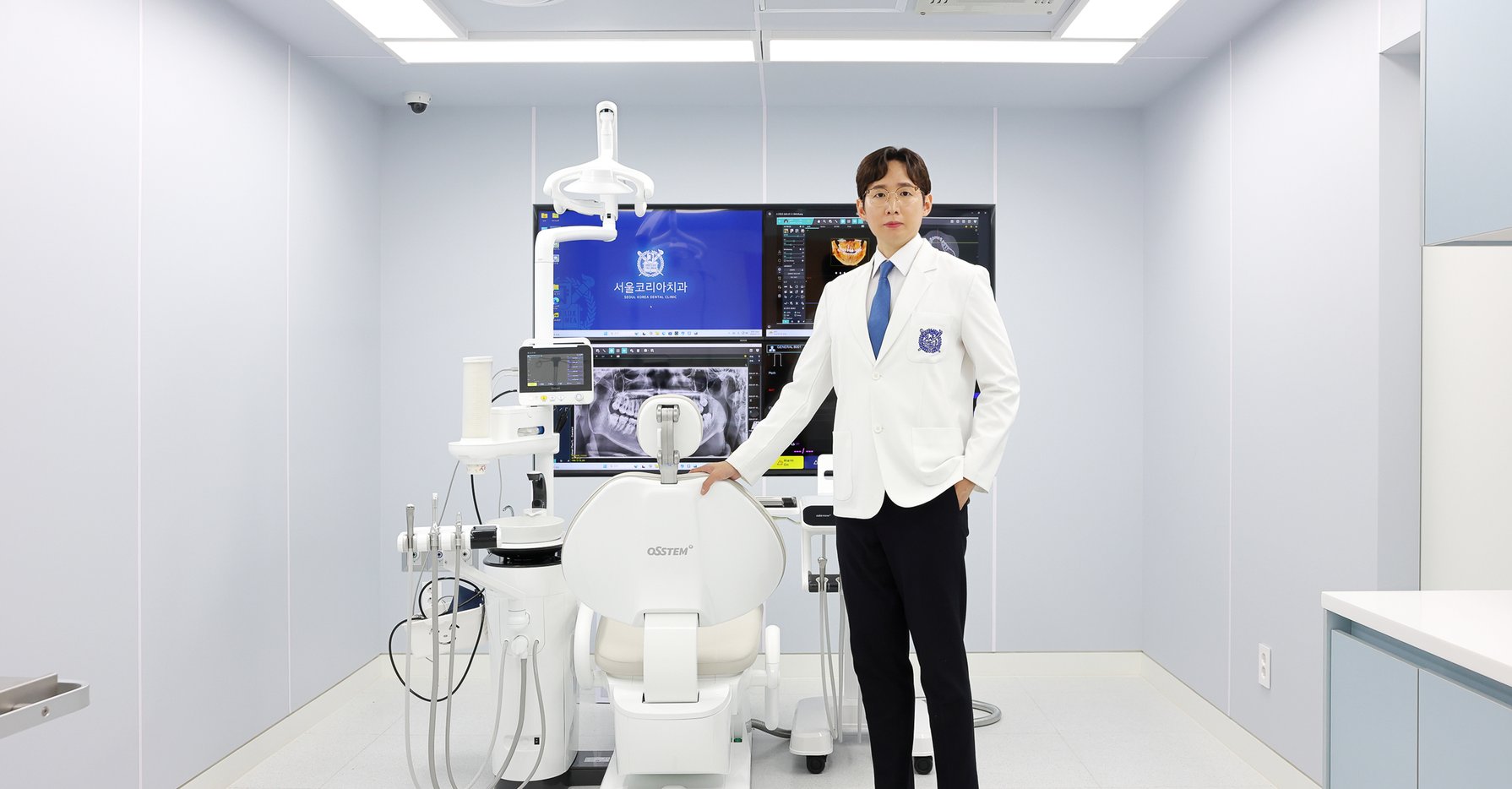
A board-certified orthodontist
looks at your child's growth stage
Our Representative Director is a board-certified orthodontist certified by the Korean Ministry of Health and Welfare,
and checks your child's teeth and jaw growth to guide treatment timing and appliance choice.
We choose the orthodontic appliance
that suits your child together
We choose the appliance to suit growing teeth and jaws.
You can also consult us about Invisalign First,
a clear aligner for children in the growth period.
Digital Orthodontics
To help reduce cavities
Preventive care for children
Fluoride application
It can be considered for children from when their teeth begin to come in, depending on cavity risk. Timing and frequency are not decided by age alone; we also check how far the teeth have come in, past cavities, and brushing and eating habits.
Regular check-ups & brushing care
Even after fluoride application, it is important to keep up proper brushing and regular dental check-ups. At check-ups, we check for cavities and changes in the teeth.
Baby teeth may also need treatment depending on how deep the cavity is and how long remains until the permanent tooth comes in.
If cavities in baby teeth are left untreated, pain or inflammation can develop, which may affect eating and sleeping.
We decide whether to treat after checking how far the cavity has progressed and when the tooth is expected to fall out.
Baby teeth matter too:
cavity treatment for children
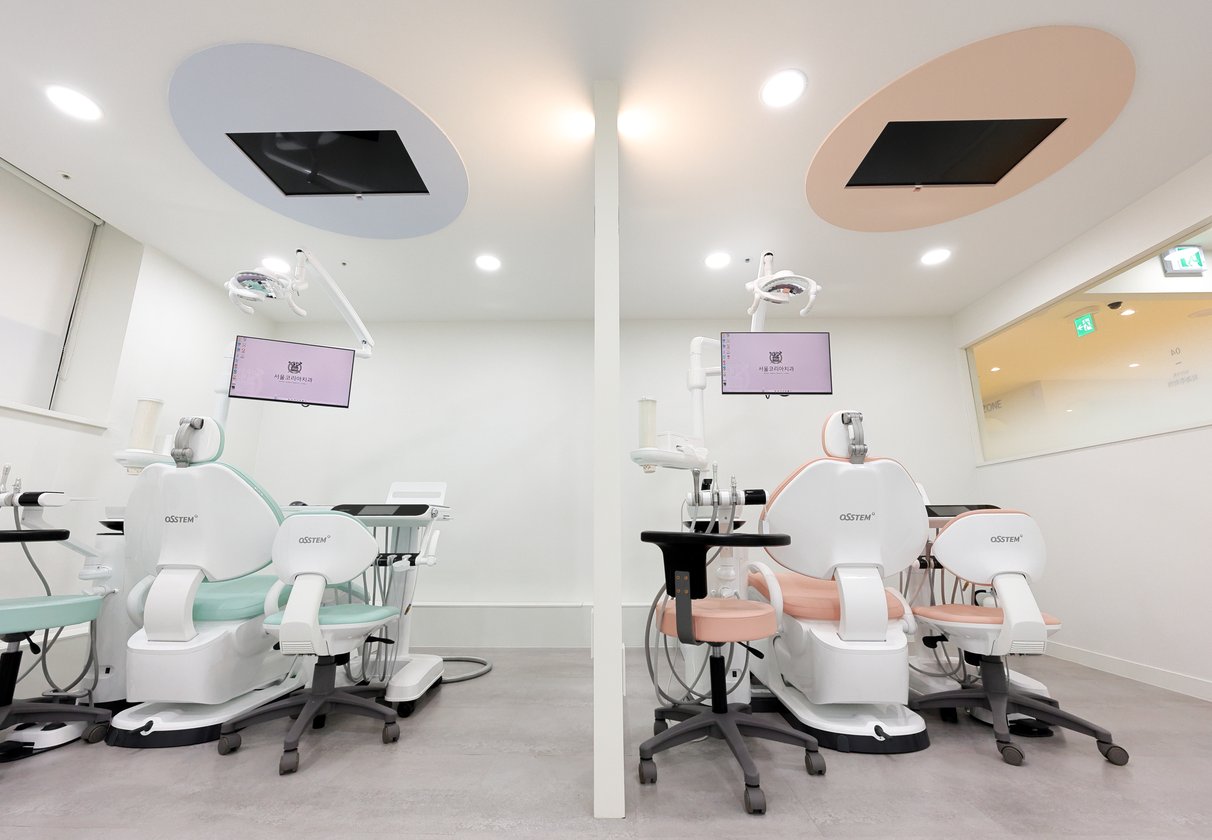
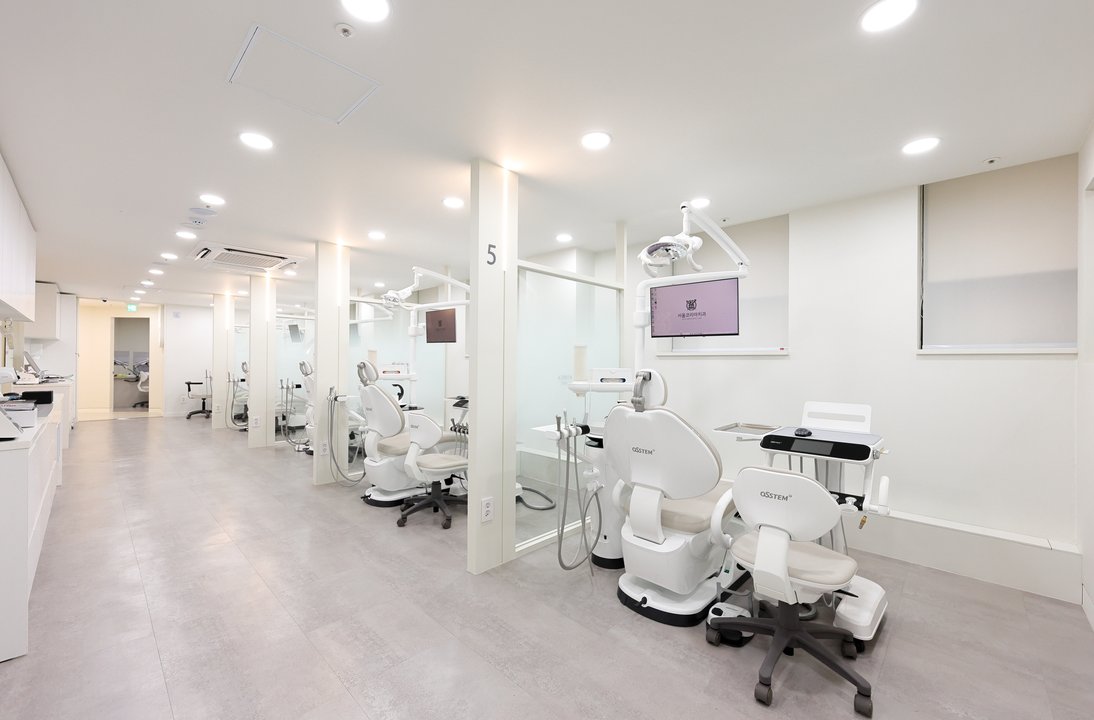
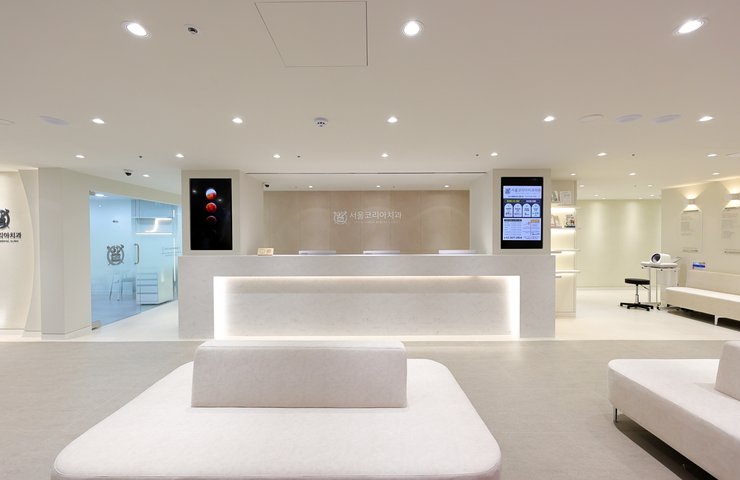
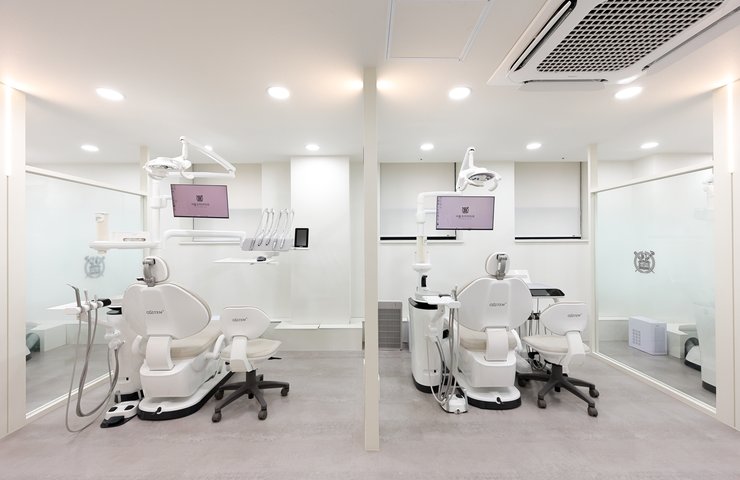
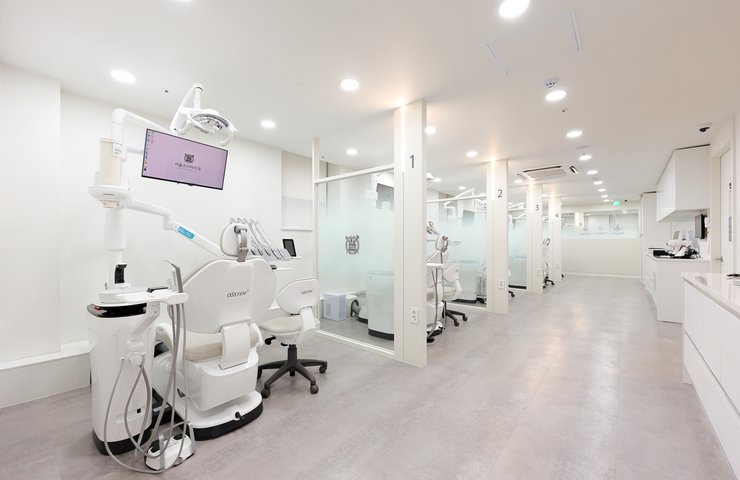
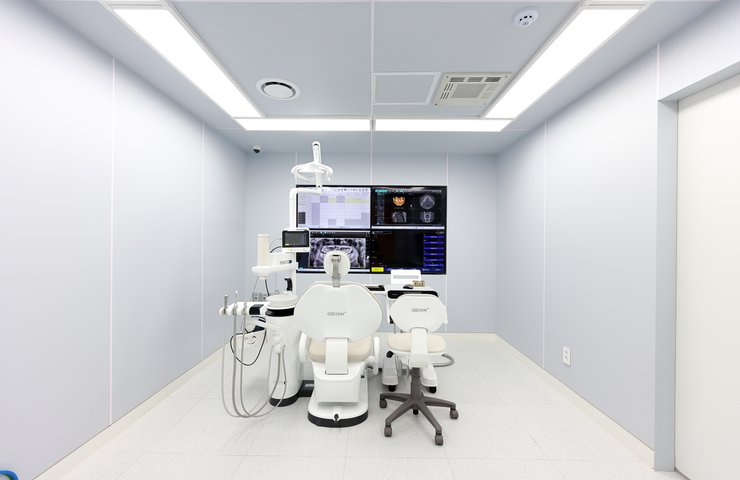
Seoul Korea Dental Clinic treatment spaces
Our waiting area, where children and parents can stay together, and our treatment rooms.
Check Point
What caregivers should check before and after treatment
Health and medications
Please tell us about your child's medical conditions, current medications, allergies, and any previous dental treatment or sedation and anesthesia experience.
Fasting before sedation or general anesthesia
Before sedation or general anesthesia, please follow the preparation instructions and fasting times given by our medical team. Do not stop any current medication on your own; let us know about it in advance.
After fluoride application
After fluoride application, please make sure your child does not eat or drink for the time we advise.
FAQ
FAQ for parents
Can a child who is very afraid of the dentist still receive treatment?
Even children who are afraid of the dentist or refuse treatment can find a suitable treatment approach through a process of adjustment. Rather than pushing ahead with treatment from the start, we check your child's age, level of anxiety, previous dental experiences, and the scope of treatment needed. If treatment is difficult with behavior management alone, we may consider nitrous oxide or sedation after assessing your child's health.
What is nitrous oxide (laughing gas) treatment?
Nitrous oxide treatment is a method in which a mixture of oxygen and nitrous oxide is inhaled through the nose to help reduce tension and anxiety during dental treatment. It is different from general anesthesia, in which the patient is fully asleep; consciousness and communication are generally maintained. We decide whether it can be used after checking health, level of cooperation, and whether the patient can breathe through the nose.
Do I need to fast before sedation or general anesthesia?
Depending on the type of sedation or general anesthesia, you may need to fast for a certain period. Separate instructions may apply not only to food but also to water, drinks, and medications, so please follow the preparation instructions and fasting time given by our medical team. Do not stop any medication on your own; tell us the type of medication and when it is taken when booking and during your consultation.
Can I receive treatment on Sundays or public holidays?
Seoul Korea Dental Clinic is open 365 days a year, including weekday evenings, weekends, and holidays. Available treatments and doctors' schedules may vary by date and time, so please call before your visit to confirm same-day hours and appointment availability.
Pediatric consultation
After checking your child's age, responses, and the scope of treatment needed, we explain the treatment approach.
Please call before your visit to confirm the schedule.